{"remix_data":[],"remix_entry_point":"challenges","source_tags":["local"],"origin":"unknown","total_draw_time":0,"total_draw_actions":0,"layers_used":0,"brushes_used":0,"photos_added":0,"total_editor_actions":{},"tools_used":{"addons":1,"transform":1},"is_sticker":false,"edited_since_last_sticker_save":true,"containsFTESticker":false}
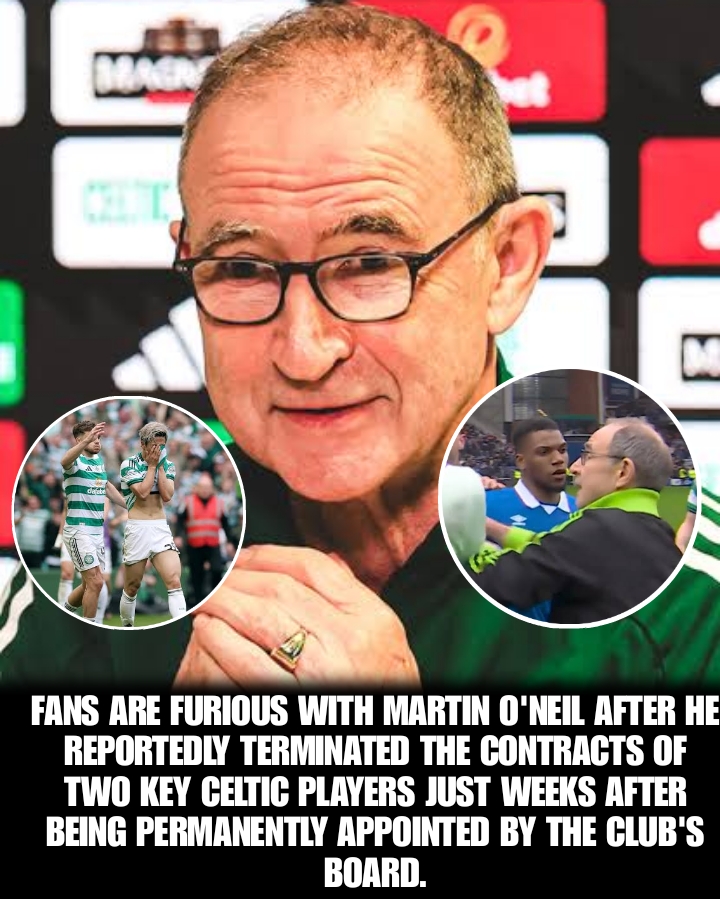
Supporters have reacted with anger and disbelief following Martin O’Neil’s controversial decision to terminate the contracts of two key Celtic players shortly after being permanently appointed by the club’s board. The move has sparked widespread debate among fans, with many questioning the timing of the decision and its potential impact on the team’s ambitions moving forward.
O’Neil’s appointment was initially met with optimism from large sections of the Celtic fanbase. Many believed the experienced manager would bring stability, leadership, and a clear vision for the future of the club. His permanent appointment was viewed as a statement of confidence from the board, signaling their belief that he was the right man to guide Celtic through the next chapter of its history.
However, that early optimism has quickly been replaced by frustration following reports that two important members of the squad have seen their contracts terminated. The decision has left supporters stunned, particularly because both players were considered influential figures within the team and had played significant roles both on and off the pitch.
Many fans have taken to social media to express their disappointment, arguing that removing experienced and respected players at such a crucial stage could create unnecessary instability within the squad. Some supporters believe the club should have focused on strengthening the team rather than parting ways with players who had already proven their value.
Critics of the decision argue that successful teams are built on continuity and stability. In their view, removing key figures shortly after a managerial appointment sends the wrong message and could disrupt the chemistry that exists within the dressing room. Several supporters have questioned whether enough consideration was given to the long-term consequences of the move.
Others have expressed concern about the message being sent to the rest of the squad. According to some fans, seeing established players leave under such circumstances could create uncertainty among teammates regarding their own futures. While football is a results-driven business, supporters often place great importance on loyalty, especially when it comes to players who have contributed significantly to the club.
The controversy has also fueled speculation about O’Neil’s broader plans for the squad. Some observers believe the manager may be attempting to reshape the team according to his own vision, making difficult decisions early in his tenure to establish authority and implement a new direction. Supporters who share this view argue that rebuilding projects often require unpopular choices and that managers should be judged on long-term results rather than immediate reactions.
Nevertheless, many fans remain unconvinced. They argue that while change is sometimes necessary, losing two key players without clear replacements already in place could weaken the squad at a time when competition remains fierce. Questions have been raised about whether adequate planning has been undertaken to ensure that the departures do not leave significant gaps within the team.
Football supporters are passionate by nature, and major decisions involving popular players often trigger emotional responses. For many fans, the issue extends beyond footballing ability alone. Players who spend years contributing to a club often develop strong relationships with supporters, making their departures particularly difficult to accept. This emotional connection has undoubtedly played a role in the backlash that has followed the reported contract terminations.
As discussions continue, some supporters have called on the club to provide greater transparency regarding the reasons behind the decision. They believe a clearer explanation could help ease tensions and allow fans to better understand the strategy being pursued by the new management team. Others, however, insist that only results on the pitch will ultimately determine whether the decision proves justified.
The board’s role in the situation has also come under scrutiny. While O’Neil may have been responsible for the footballing decision, some fans believe the club’s leadership should share responsibility for any controversial changes made so soon after confirming his permanent appointment. The debate has highlighted the pressures facing both the manager and the board as they attempt to balance long-term planning with immediate expectations.
Despite the criticism, there are supporters willing to give O’Neil the benefit of the doubt. They argue that experienced managers are often required to make difficult calls and that successful leadership sometimes involves taking risks that may initially prove unpopular. These fans believe it is too early to judge the decision without seeing how the squad develops in the coming months.
For now, however, frustration remains widespread among sections of the Celtic fanbase. The departure of two important players has created uncertainty and sparked intense debate about the direction of the club under its newly appointed manager. With expectations high and scrutiny increasing, O’Neil will undoubtedly face pressure to demonstrate that his controversial decision was made with the club’s best interests in mind.
The coming weeks and months may ultimately determine how this episode is remembered. If Celtic thrive and achieve success, supporters may eventually view the move as a bold but necessary step toward progress. If results fail to meet expectations, however, critics are likely to point back to this decision as an early warning sign. Until then, the controversy surrounding the contract terminations is set to remain a major talking point among Celtic supporters.
About the Author