{"remix_data":[],"remix_entry_point":"challenges","source_tags":["local"],"origin":"unknown","total_draw_time":0,"total_draw_actions":0,"layers_used":0,"brushes_used":0,"photos_added":0,"total_editor_actions":{},"tools_used":{"addons":1},"is_sticker":false,"edited_since_last_sticker_save":true,"containsFTESticker":false}
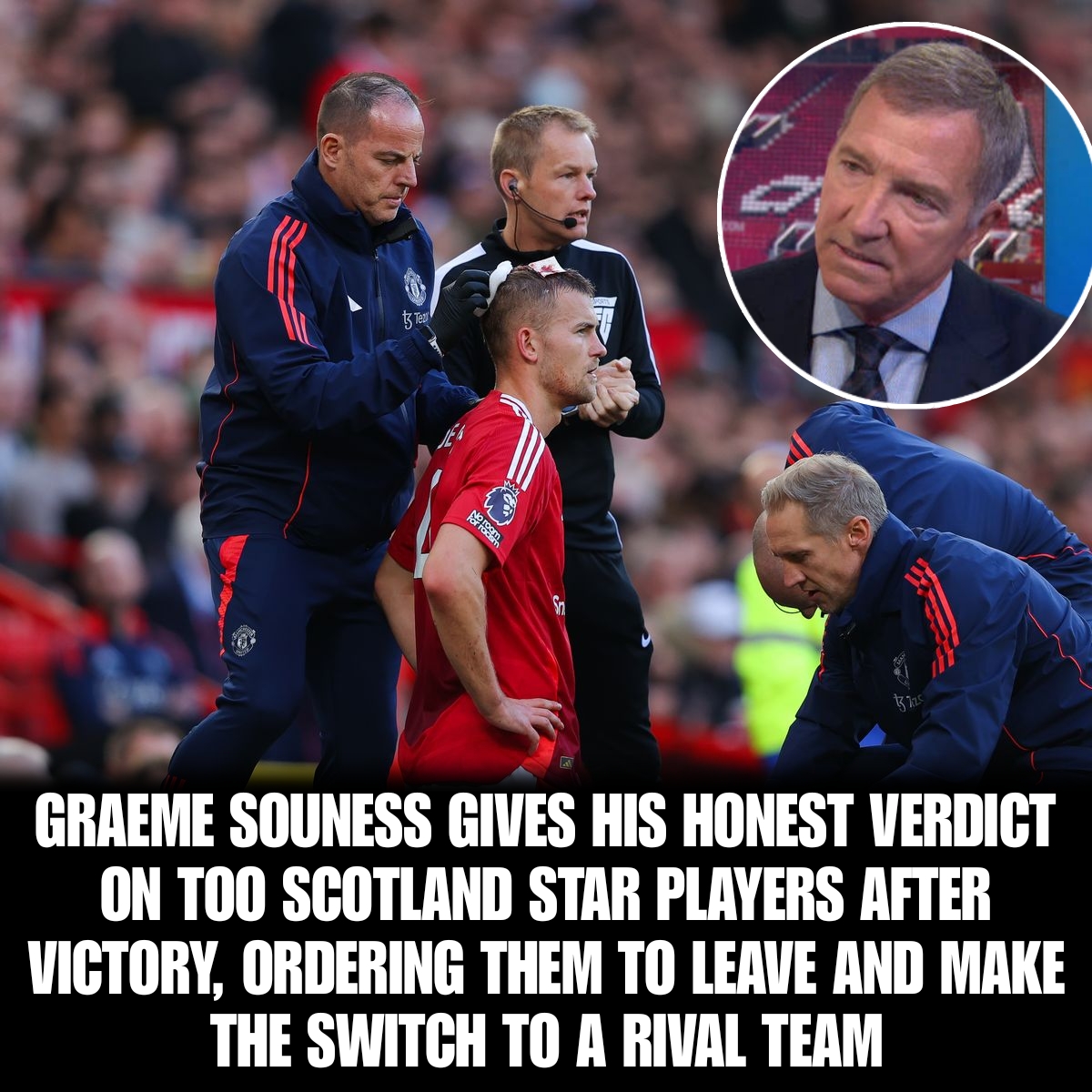
Scotland’s latest victory should have been a moment dominated entirely by celebration, optimism, and praise for the players who helped secure the positive result. Instead, much of the conversation following the match has centered around comments made by former Scotland international and football pundit Graeme Souness, who offered a surprising assessment of two Scottish stars despite the team’s success.
While many supporters expected praise and encouragement after the victory, Souness took a different approach. Rather than focusing solely on the result, he shifted attention toward the futures of two players whom he believes may have reached a critical stage in their careers. According to his assessment, the pair should seriously consider leaving their current environment and pursuing new challenges elsewhere if they wish to maximize their potential and continue progressing at the highest level.
The remarks immediately generated discussion among supporters, pundits, and former players. Some agreed with Souness’s viewpoint, arguing that ambitious footballers must constantly seek opportunities that challenge them and help them improve. Others felt his comments were poorly timed, especially considering that the players had just contributed to an important victory that should have been celebrated rather than scrutinized.
Souness, however, appeared unconcerned about whether his opinion would prove controversial. Throughout his career as both a player and a commentator, he has built a reputation for speaking candidly and refusing to soften his views simply because they may be unpopular. His latest comments fit that pattern perfectly.
The former midfielder suggested that although the players continue to perform well, there is a growing sense that they may benefit from a fresh start. In his view, remaining in the same situation for too long can sometimes limit a player’s development. Football careers are short, and opportunities to compete at the highest level do not last forever. As a result, he believes the time may be approaching for both players to consider what comes next.
Many observers interpreted the comments as a challenge rather than a criticism. Souness did not necessarily question the talent or commitment of the players involved. Instead, he appeared to be emphasizing the importance of ambition and long-term growth. According to that perspective, moving elsewhere would not be an admission of failure but rather a strategic decision designed to elevate their careers.
Supporters quickly took to social media to debate the issue. Some agreed wholeheartedly, arguing that top players should always seek the most competitive environments available. Others countered that loyalty remains important and that success can still be achieved without constantly changing clubs.
The debate became even more intense because both players have established themselves as important figures for club and country. Their contributions have earned widespread respect, and many fans believe they still have unfinished business where they are. For those supporters, the suggestion that they should leave immediately after a victory felt unnecessary and even disrespectful.
Despite the criticism, there were also many who saw merit in Souness’s analysis. They pointed to numerous examples of footballers whose careers reached new heights after making bold moves. Sometimes a change of scenery can provide fresh motivation, expose players to different tactical systems, and allow them to test themselves against stronger opposition on a regular basis.
Others noted that football is becoming increasingly competitive, making career planning more important than ever. Players who remain comfortable for too long can find themselves overtaken by emerging talents. In that context, Souness’s comments were viewed not as an attack but as practical advice from someone who understands the demands of elite football.
The players themselves have not publicly responded to the remarks. Their focus remains on maintaining strong performances and helping their team build momentum following the victory. Those close to the situation suggest that neither player is allowing outside speculation to distract them from their immediate objectives.
Managers and teammates have also remained relatively quiet on the issue. While discussions about transfers and future moves are common in football, many within the game prefer to concentrate on performances rather than speculation. As a result, attention has remained largely on Souness and the reaction his comments generated.
What cannot be denied is that the former Scotland star has once again succeeded in sparking a national conversation. Whether supporters agree or disagree with his assessment, his words have ensured that the futures of the two players remain a major topic of discussion.
For now, the players continue to enjoy the confidence that comes from helping secure an important victory. Yet Souness’s comments have introduced an intriguing question about what the future might hold. Should they stay and continue building on their current success, or should they embrace a new challenge in pursuit of even greater achievements?
Only time will provide the answer. Football history is filled with examples of players who thrived after remaining loyal and equally filled with examples of those who benefited enormously from moving on. The difficult task lies in knowing which path is right at the right moment.
As the debate continues, one thing is certain: Graeme Souness has once again shown that he is never afraid to express a strong opinion. Whether his advice proves correct remains to be seen, but his verdict has already ensured that the spotlight remains firmly fixed on the two Scotland stars long after the final whistle of their victory.
About the Author