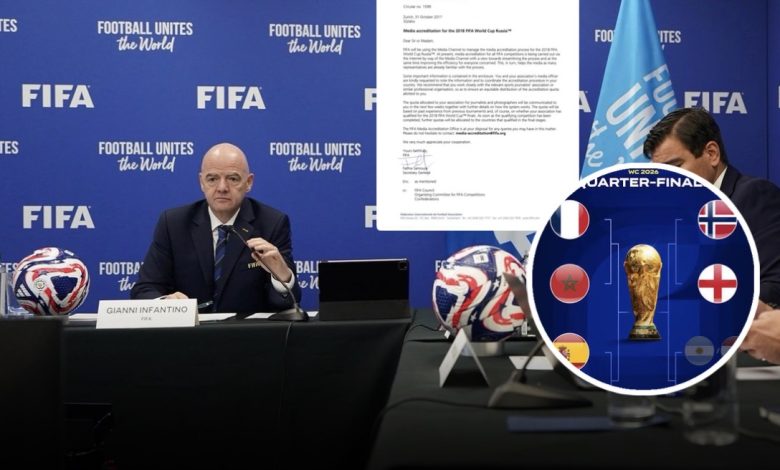
At the heart of the controversy is FIFA’s refereeing chief, Pierluigi Collina, who used a specific England example from a pre-tournament friendly to illustrate what will no longer be tolerated. The change empowers VAR to review and potentially disallow goals if an attacking player commits a foul (such as illegal blocking or wrestling) immediately before a set-piece like a corner kick is taken. This aims to clean up the game, reduce cynical tactics, and ensure fairness, but critics argue it could disproportionately impact teams like England that have historically thrived on physical, organized set-piece routines.
The Background: A Rule Change Born from Frustration
To understand why this has “kept everyone talking,” we need to go back to the lead-up to the tournament. In May and early June 2026, the International Football Association Board (IFAB) and FIFA rolled out a suite of rule adjustments designed to speed up play, curb time-wasting, and address persistent issues with simulation, dissent, and set-piece chaos. Among them: 10-second substitution limits, stricter handling of medical timeouts, bans on goalkeepers using injury delays tactically, and expanded VAR authority.
The set-piece focus, however, stands out. Collina, in presentations to teams and officials, explicitly referenced England’s March friendly against Uruguay at Wembley. In that match, Ben White scored a header from a corner after Crystal Palace midfielder Adam Wharton was involved in what Collina described as a clear “illegal block” on Uruguay defender José María Giménez. The goal stood at the time, but under the new protocol, VAR could intervene and chalk it off because the foul occurred before the ball was in play.
“We are convinced that this goal cannot stand. It is completely unfair,” Collina stated, emphasizing that attackers cannot prevent defenders from challenging fairly. This wasn’t just abstract guidance — it was a pointed example, and media outlets quickly framed it as FIFA “singling out England.” Thomas Tuchel’s side, known for its aerial threat and set-piece organization under coaches like Gareth Southgate previously and now Tuchel, suddenly found itself in the spotlight as a cautionary tale.
The official FIFA statement and referee seminars reinforced this: VAR can now review attacking fouls in the immediate build-up to corners, free-kicks, and throw-ins. The intent is noble — reducing the “wrestling matches” that often turn set-pieces into farce — but the timing, just weeks before knockout stages, has fueled accusations of moving goalposts mid-tournament.
Why England Might Suffer the Most
England’s set-piece prowess is no secret. In recent major tournaments, a significant portion of their goals have come from dead-ball situations. Harry Kane, Declan Rice, Jude Bellingham, John Stones, and substitutes like Ben White or even Kyle Walker bring height, timing, and physicality that make them lethal from corners and free-kicks.
Analysts estimate that under the old interpretation, England converted set-pieces at a higher rate than many rivals. The new scrutiny could force adjustments:
Tactical Adaptation Needed: Tuchel may need to dial back aggressive screening or blocking runs. This risks reducing the surprise element that has bailed England out in tight games, such as their dramatic Round of 16 win over hosts Mexico.
Referee Discretion and Inconsistency: While the rule is clear in theory, enforcement varies. England’s high-pressing, physical style already draws scrutiny. Pundits worry that referees, now hyper-aware after FIFA’s emphasis, might overcompensate, leading to more disallowed goals or even yellow cards for “persistent infringement.”
Psychological Impact: Players and fans are rattled. Social media is flooded with memes of “FIFA vs. England set-pieces.” If a crucial quarterfinal goal is ruled out, the narrative writes itself: “FIFA targeting the Three Lions.”
Compare this to other quarterfinalists. Norway, England’s opponents, rely heavily on Erling Haaland’s individual brilliance and counter-attacks rather than intricate set-piece routines. France, Spain, and Argentina have varied attacking options less dependent on physical dominance at corners. England, with its traditional “Route One” strengths amplified in the modern game, stands to lose the most from a strict interpretation.3ca14f
In the Round of 16 against Mexico at altitude, England already navigated challenges — a red card, intense pressure, and scheduling drama involving UK Prime Minister Keir Starmer’s intervention. Now, heading to Miami, this rule adds another layer of complexity against a Norway side buoyed by Haaland’s form and their historic run.a7919f
Broader Context: The 2026 Rule Overhaul
This isn’t an isolated tweak. FIFA’s broader push includes:
Anti-Timewasting Measures: Clock stops for throw-ins, goal kicks, and subs; hydration breaks (sometimes controversial, as seen in Mexico games).
Discipline Enhancements: Red cards for covering mouths during confrontations or leaving the field in protest.
VAR Expansions: Reviewing corners and second yellows more proactively.2b753d
Supporters praise these for making matches more watchable and fairer. Critics, especially English fans, see selective enforcement. One viral post noted how England’s friendly example was paraded while similar incidents elsewhere went unmentioned. The debate has transcended football, touching on governance, national bias perceptions, and the commercialization of the World Cup.
Reactions from All Sides
The statement ignited a firestorm. English media outlets like The Times, Mirror, and Express ran headlines decrying the “targeting” of Tuchel’s men. Former players weighed in: some defended the crackdown as overdue, others called it disruptive to a tournament already underway.
On the continent and in South America, reactions were more muted or even celebratory — “Finally, no more English dark arts at corners.” Norwegian fans, anticipating the quarterfinal, joked about Haaland exploiting any defensive disorganization caused by England’s adjusted routines.
Social media platforms, particularly X (formerly Twitter), exploded with hashtags like #FIFAvEngland and #SetPieceGate. Polls showed divided opinions: roughly 45% of global respondents supported stricter rules, but among English fans, opposition neared 80%.
Tuchel himself has been diplomatic in press conferences, focusing on preparation: “We adapt. Football evolves, and so do we.” Insiders suggest training has shifted toward quicker, cleaner deliveries and varied routines to mitigate risks.
The Quarterfinal Implications: England vs. Norway
As England prepares for Norway on July 11 in Miami, the stakes couldn’t be higher. Norway’s fairy-tale run — shocking Brazil in the Round of 16 thanks to Haaland masterclass — makes them formidable underdogs with nothing to lose.4117d1
Key matchups:
Haaland vs. England Defense: The Manchester City striker’s aerial ability ironically mirrors England’s strengths. If set-pieces are neutered for both, it could favor open play.
Midfield Battle: Bellingham and Rice’s dynamism against Norway’s structure.
The Rule Factor: One wrongly (or rightly) disallowed goal could swing the tie. England must be clinical in open play, something they’ve sometimes struggled with.
A semi-final berth awaits the winner, potentially against heavyweights. For England, often accused of underachieving despite talent, this rule adds pressure but also opportunity to prove versatility.
Looking Ahead: Legacy of the Rule
Whether this change ultimately benefits the sport remains to be seen. If it leads to fewer stoppages and purer goals, fans win. If it creates controversy in knockout stages, it could undermine trust in VAR further.
For England, the narrative is familiar: perceived obstacles on the road to glory. They’ve overcome altitude, scheduling disputes, and now regulatory scrutiny. The squad’s depth and Tuchel’s tactical acumen offer hope.
As the quarterfinal approaches, one thing is certain — this FIFA statement has amplified the drama. Football thrives on such talking points, blending rules, rivalry, and raw emotion. England fans will be watching every corner with bated breath, hoping their set-piece magic survives the new era.
In the end, the beautiful game continues to evolve. The question is whether England can evolve faster than the rules designed, in part, with them in mind. The Miami clash will provide early answers, but the conversation is far from over.
About the Author